The Charles Malik Institute
Exploring the big questions at the intersection of religion, culture, and politics through the legacy of Charles Malik
The Legacy of Charles Malik
Pillars of His Legacy
Crisis Leadership
Throughout his career in academia and politics, Charles Malik served as a calm and charismatic leader in uncertain times. Confronting seasons of adversity, he turned to his faith for wisdom and courage. He integrated his Christian convictions with his public duties, engaging the political world without succumbing to its vices.
A century later, Malik remains a powerful example for young Christian leaders and political actors.
Human Rights & Religious Freedom
Charles Malik believed in universal values, such as freedom, human dignity, and the value of pluralism, that cut across time and permeated all civilizations and cultures. Malik saw these values manifest most clearly in the Greco-Roman, Judeo-Christian, and broader Western tradition.
Best known for his work on the Universal Declaration of Human Rights of 1948, Malik authored the Declaration's Preamble with its philosophical underpinnings and the text of Article 18 on religious freedom, freedom of conscience, and the freedom to change one's religion.
When he offered a friendly critique of America and the West, Malik did so by constantly calling the West, should it stray, to return, and to remain faithful to its bedrock values.
Free Christianity in the Near East & the West
As a Middle Eastern Christian, Malik experienced the sorrows and joys that defined his community and empathized with the challenges facing native-rooted Christians across the Muslim world. Throughout the 20th century, he defended the freedoms of beleaguered Christians in his ancestral home of Lebanon, which meant little to Malik without its free Christian community.
Malik sought to preserve the cultural and spiritual connections between Lebanon's Christians and the wider Christian world. When the occasion for tangible world Catholic-Orthodox rapprochement presented itself in the 1960s, Malik found himself in a unique position to help mediate and facilitate this ecumenical openness, given his special proximity to the Eastern Orthodox Patriarchate in Istanbul.
In addition to his peace-making efforts between Christian traditions, he also believed Christians and Muslims could flourish together in reciprocal appreciation for one another's differences– celebrating and fortifying their shared values while remaining true to their cherished beliefs.
Get Involved
Events
Get involved! Explore our upcoming and recent events
Who Was Right About the West? Contrasting Critiques From the Arab World
May 2026
Host a Book Study
You can host a book group
Coming Soon: The First Intellectual Biography of Charles Malik
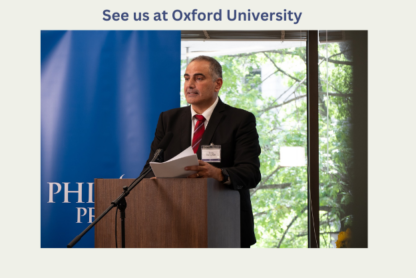
Speaking Engagement at Oxford University, Fall 2026
Fall 2026
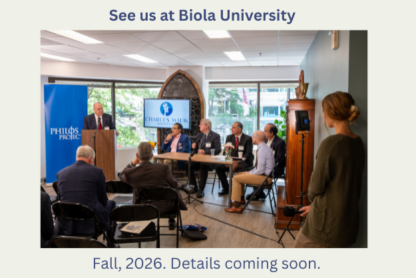
Speaking Engagement at Biola University, Fall 2026
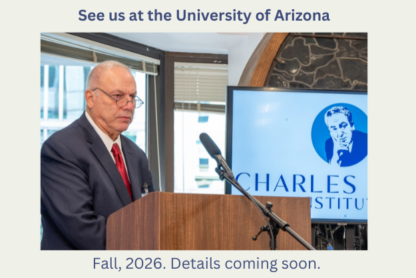
Speaking Engagement at the University of Arizona, Fall 2026
Join the Mission
Support CMI
Support the vital mission of the Charles Malik Institute as we strive to combat institutional decay in American Academia and foreign policy.
The Malik Archive
Explore the Malik Archive
Voices of Support
Endorsements
"Perhaps no time since the 1940s, when Charles Malik was one of the premier Christian intellectual voices in the aftermath of the Second World War, have his insights into human freedom been more important. At a moment of cultural crisis in the West, the need for Christian leaders and statesmen is beyond urgent—and Malik and his legacy point the way forward. This makes the work of the Charles Malik Institute essential: Indeed, it is hard to conceive of intellectual and spiritual renewal along the lines that Malik envisioned without it."
Distinguished Visiting Professor at Grove City College, Pennsylvania, and Senior Fellow at the Institute on Religion and Democracy.
"Thanks to the Charles Malik Institute, the works of one of the greatest 20th-century thinkers and statesmen are beginning to be more widely known. Malik's thought, far ahead of its time, is highly relevant to today's multipolar world. A leading figure in the early UN, he played a crucial role in the framing of the cornerstone of today's international human rights system, the Universal Declaration of Human Rights, and was a respected mediator between East and West, North and South."
Learned Hand Professor of Law at Harvard Law School and a former United States Ambassador to the Holy See.
Stay Connected
Learn More
Sign up for our monthly newsletter